


‘I want to be a door and not a gate’ | The Homepage
Q&A with the new director of Pitt’s Hazelwood program
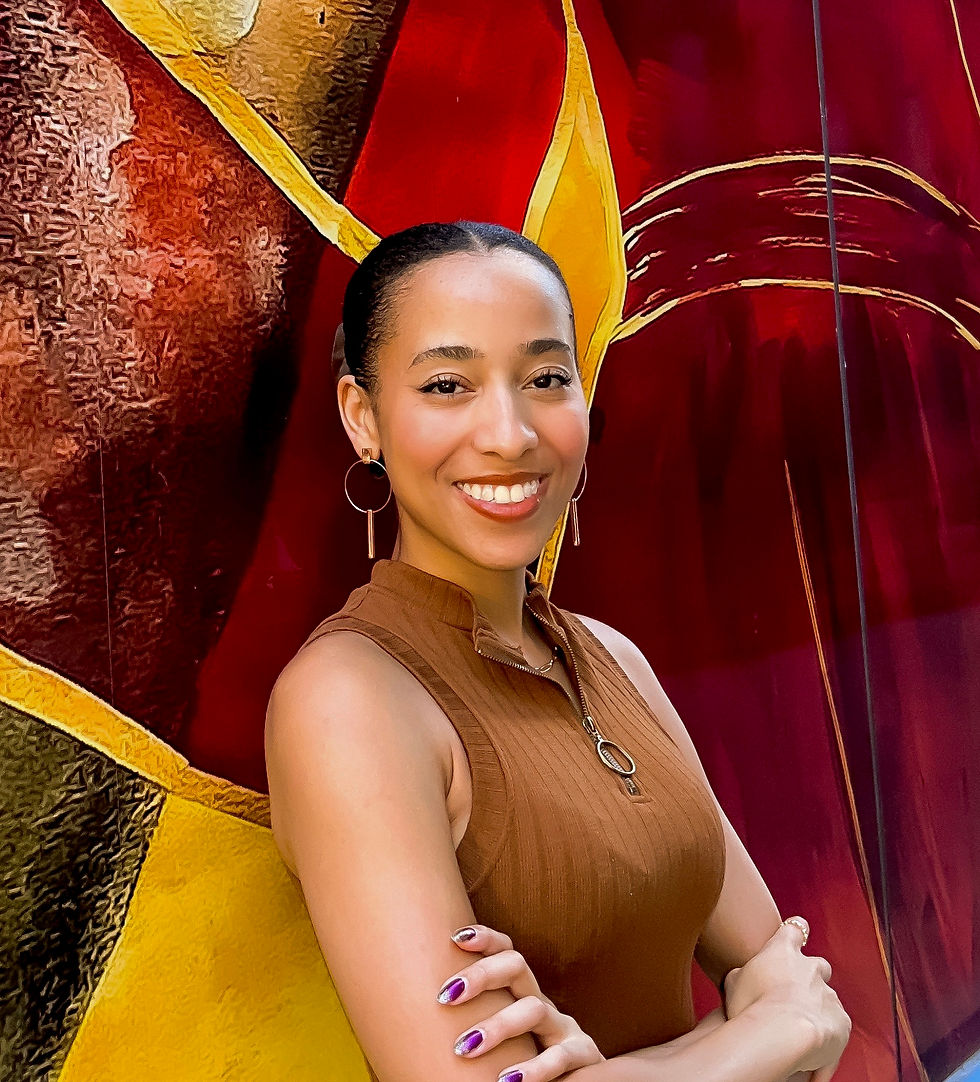
By Managing Editor Juliet Martinez
The University of Pittsburgh Greater Hazelwood Neighborhood Commitment has a new leader at its helm. Her name may be familiar in Hazelwood, where she have given talks and led workshops, and in Greenfield, where she lived for three years.
Morgan Overton brings a multi-faceted personal and professional history to her new role as director. A lifelong artist, she has also been a social worker, political organizer, scientist and gallerist. The Penn Hills native has two degrees from Pitt: A bachelor’s in psychology with a studio art minor, and a master’s in social work with a focus on community organizing and social action. She started as director in late September, taking over for Hazelwood resident Heidi Ward, who left the role in July.
Ms. Overton spoke with The Homepage on Sept. 30 about her background and how she is approaching this new position. Her answers have been edited lightly.
What are your Hazelwood connections?
I’ve held a handful of art workshops there or have been a guest speaker or have done something with civic engagement. I had a youth workshop at Center of Life. I gave a fireside chat about Dr. Martin Luther King Jr. with youth at Hazelwood Café a few years ago. In my previous job, I gave a talk to students at Industrial Arts Workshop. And I lived in Greenfield for three years, so if I had a hankering for La Gourmandine, it was right there.
I built an organic footprint in Hazelwood. I’m excited to keep doing what I’ve been doing, but more formally through this role.
You have studied neuroscience, psychology and social work. How have those studies prepared you for this role?
Growing up in Pittsburgh, being a PBS kid, I loved seeing how the brain worked. And I also did art ever since I could blink.
So, I was a psychology major for undergrad. My whole focus was in developmental cognitive neuroscience, and I was very involved civically. I worked on the Obama campaign. I did a lot of community organizing efforts in Pittsburgh. I went on to work in a neuroscience lab at Boston Children’s Hospital for two years.
When I was in Boston, I started feeling like I was removed from people and not having a direct impact. So, I looked up “What is a graduate program in social justice?” and Pitt’s School of Social Work was the first thing that came up.
I think, ultimately, those pathways led me to be well equipped for this role. And I’m a fifth-generation Pittsburgher. I understand what it means to come from a working-class family. I’m the first in my family to go to a four-year university.
My dad has always told me, “A person can be a door.” I want to be a door and not a gate for the people of Hazelwood. I want to build on what Heidi Ward started here when she was the director. This role truly requires all of who I am.
How do you see your art informing your work as director of the Pitt Greater Hazelwood Neighborhood Commitment?
Hazelwood is a very artsy community. And I’m excited to tap into that energy there. Art is something people feel free doing. That’s my goal for people: To channel that inner child.
I don’t care if you can’t draw a straight line with a ruler and you’re not an artist. We all have something to express: Maybe it’s a painting about the life sciences or about housing or what they want to see in their community. Art is a beautiful way to get people activated. I’m excited to explore that.
Art is my heart and soul. I wholeheartedly believe art is what is keeping us human and connected with one another. I enter all these spaces as an artist first. It is an extension of my community engagement, my civic voice. My art is another platform for us to see one another.
You often talk about “humanity” as a quality or theme in your work. What does that mean to you, and how do you see it informing your work in Hazelwood?
Here’s an example. Last summer, I was in an artist residency at the School of Visual Arts in New York City.
A lot of the works that I created were about my family history, people that I never got to meet. Through oral history with my family or genealogy research, I created pieces about them to make sure their voices and their histories and their humanity was valued and not some obscure name and some record somewhere, or not lost as though they didn’t exist or have dreams.
We had something called Open Studios when everybody comes to check out the work. One of my pieces is a representation of my maternal grandmother, who I, unfortunately, never had the chance to meet. The image of her that I created is a representation of what she could have looked like if she reached elder age. And she’s also an Afrofuturist matriarch that represents love never losing its way.
People of all backgrounds were looking at my work in tears, talking about their own immigration story, or how they never got to meet their own grandmother. Or it made them recognize that, even though I’m looking at a Black figure that this artist created, I see myself.
That’s the essence of my work: To be rooted in ourselves as people and in our selfhood, in our personhood, that we have hopes and dreams on this Earth and we’re here for a divine reason and purpose. And you get to see it, too, and recognize that in you. The next person you see when you leave the room, when you leave the art, you see them too. That’s where I see humanity.
Why is Afrofuturism important in a neighborhood like Hazelwood?
A lot of my artwork, early on, centered on portraits of freedom fighters. It evolved into ways of conveying Black people in the pursuit of justice, freedom, liberation. As time went on, I recognized more and more how precious our humanity is. I wanted my artwork to serve as a window to see what it would look like once we reach the mountaintop that Dr. King spoke of.
You are an Afrofuturist because you see what’s possible when we finally do “overcome.”
A lot of my artwork now is dedicated to psychological safety, self-determination; principles from psychology and humanism. My goal as a social worker, as someone who has been trained in our internal understanding of this world and ourselves, and as an artist, is to approach my work in Hazelwood with a strengths-based approach and not a deficit.
It’s easy to get caught up in your understanding where there’s areas of opportunity, what needs to be remedied, what needs restorative justice. And my goal is to lean into the assets that already exist in the community. That’s Afrofuturism: understanding how we can use all these different disciplines to not only imagine but implement and actually have people living to their fullest potential.
What else should people know?
I don’t regret any of the paths that I took. I don’t dwell on any would have, could have, should have. It’s made me more of a well-rounded person, having the science hat, the art hat, the Pittsburgh hat.
And there could be a whole other hat that I don’t even know is waiting for me. And maybe that’s what Hazelwood can teach me. Maybe there’s something that will ignite something in me that the community teaches me. I want people to know that it’s OK to embrace all of who you are.
If you’re an artist, please pursue it, because I know a lot of people who live with regret because, you know, you’re trying to survive and you’re trying to do what you can. Allow yourself to thrive a little bit and explore all of those parts of yourself.
Ms. Overton’s work can be seen at morganovertonart.com, and three of her pieces adorn a building façade on the 900 block of Penn Avenue Downtown.


Comments